Choosing & specifying
Worktops in Malta: quartz, sintered stone or laminate
A materials guide built from what Halmann Vella, Rabat Marbles, Caesarstone and nobilia publish themselves — including where they publish nothing at all.
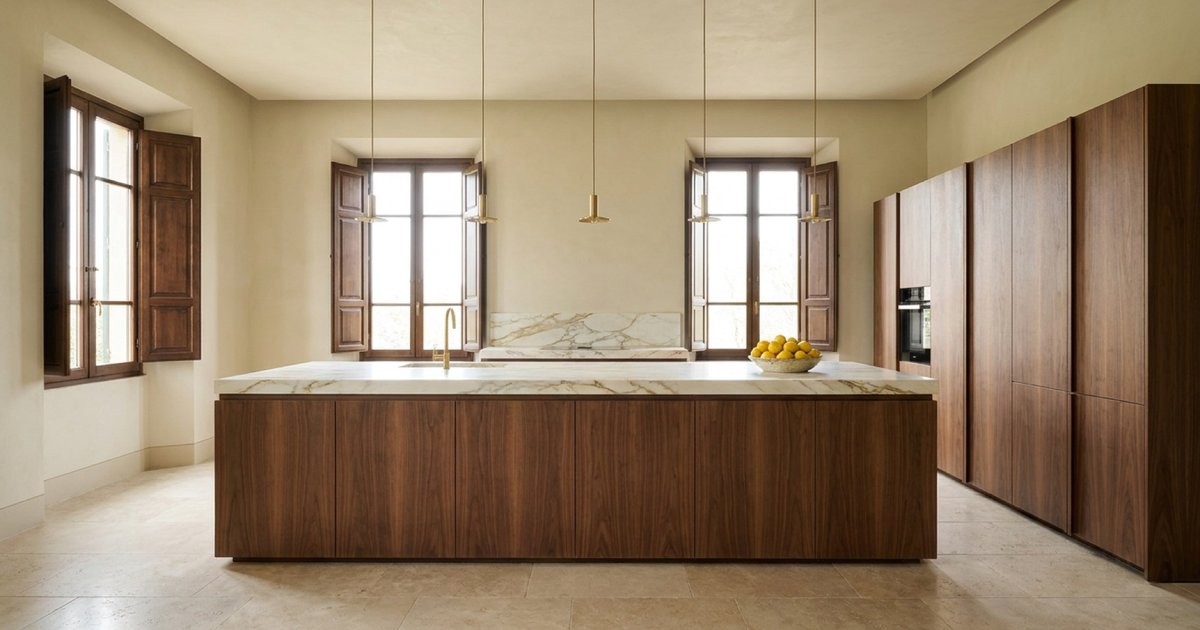
The worktop is usually the single most expensive surface in a Maltese kitchen, and it is the one decision that is genuinely hard to reverse once the cabinets are in. It is also the part of the brief where showroom staff are most likely to speak in brand names — Silestone, Dekton, Neolith, Lapitec — without explaining what the brands are made of or what the makers themselves promise.
This guide sticks to what the manufacturers and the Maltese suppliers publish on their own websites. Where they publish nothing, that is stated rather than filled in.
Engineered quartz
Halmann Vella describes itself as the exclusive supplier in Malta of Silestone quartz kitchen tops, with over 60 colours available. It describes Silestone as a compound of 93% natural quartz bound with resin, and notes that quartz rates 7 on the Mohs hardness scale.
The claims Halmann Vella makes on that page are that Silestone resists stains, acids, scratches and impact; that it is non-porous with anti-microbial protection; and that it does not need resealing, polishing or reconditioning. That last point is the practical one: unlike some natural stone, an engineered quartz top is not sold as something you re-treat every couple of years.
What the page does not say is anything about heat. There is no heat-resistance figure and no statement about hot pans. There are also no slab thicknesses published.
For an indication of how a quartz maker expects its own product to be treated, Caesarstone's care and maintenance guidance — published on the brand's Canadian studio site, not by any Malta supplier — is explicit. It says hot cookware should always be placed on a trivet or hot pad. It says to use a cutting board and keep sharp utensils off the surface. It warns that prolonged exposure to chemicals can damage the surface, and that high- and low-pH products should be used with caution. For its porcelain surfaces it specifically names hydrofluoric acid, or products containing it, as damaging.
Caesarstone also gives stain removal by type: cooking stains with a kitchen or glass cleaner, coffee and wine with an all-purpose cleaner, limescale with a limescale cleaner or diluted white vinegar, and rust with oxalic acid. That last one is worth noting if you are planning an island with an exposed run near a window.
The upshot: engineered quartz is hard and low-maintenance, but plan for a trivet to live permanently next to the hob. No maker in these sources publishes a temperature at which quartz fails, so there is no safe number to work to.
Sintered stone
Sintered surfaces are a different category. Halmann Vella states it is the exclusive supplier of Dekton in Malta, and describes Dekton as a sintered blend of the raw materials used for glass, porcelain and quartz surfaces.
Per Halmann Vella's page, hot cookware can be placed directly on Dekton without burning, scorching or cracking, and the material is thermal-shock resistant. It is described as highly UV resistant and as not fading, so it can be used indoors and outdoors. Porosity is described as extremely low, the surface never needs sealing, and stains including wine, coffee, marker and rust can be removed. Halmann Vella still recommends using a cutting board.
Halmann Vella also makes three marketing claims that are worth reading as marketing rather than as independent test data: that Dekton is the "most scratch resistant surface on the market", that it has over five times the flexural strength of granite, and that it supports an unsupported overhang of up to 12 inches. The overhang figure in particular is the sort of thing to confirm in writing with whoever fabricates and installs your island, not to design around on the strength of a web page. Dekton slabs are listed at up to 320 x 144 cm.
Rabat Marbles stocks Neolith, another sintered surface. Its Neolith page describes the material as a sintered compact surface made from natural raw materials under very high pressure and temperature, resistant to very high temperatures and stain resistant. Slab formats listed are 3,200 x 1,500 mm and 3,600 x 1,200 mm, with satin, silk, riverwashed, polished and matte finishes.
Rabat Marbles also lists Lapitec, Italstone, Laminam and Stone Italiana on its site, and holds stock of quartz, quartzite, marble, travertine, onyx and semi-precious stones. It offers bespoke work including kitchen counter-tops, and its portfolio includes an Italstone residential kitchen.
The upshot: if you want a surface that tolerates a pan straight off the hob and direct sun on a terrace, the sintered category is the one whose suppliers state those properties in writing. Sharp knives are still a bad idea on it.
Natural stone and granite
Rabat Marbles states that it holds granite in stock, alongside marble, travertine, quartzite and onyx.
That is the only sourced fact available here. No manufacturer or supplier page in this set describes how granite behaves with heat, acids, oil or red wine, or whether it needs sealing and how often. Those are exactly the questions that decide whether granite suits a working kitchen, and they are not answered by anything published. Ask the supplier directly, in writing, about sealing intervals for the specific stone you are choosing — the answer differs between stones, not just between materials.
Laminate on a chipboard core
Laminate is the budget option and it is still what most volume kitchen ranges fit as standard. nobilia's technical product description (document released 08.01.2026) specifies its standard laminate worktop as 38 mm thick with a chipboard substrate and a CPL or HPL laminate surface 0.6 to 0.8 mm thick. Front edges are either postformed (what nobilia calls the N-edge) or finished with 1.5 mm PP edging glued with waterproof PUR adhesive. The underside is coated with a water-repellent resin-soaked paper.
The critical line in that document is about water: cut-outs and tongue-and-groove joints must be sealed on site with a moisture-repelling agent, and nobilia supplies worktop sealing tape for the job. A laminate top fails at the sink cut-out, where the chipboard core is exposed, and that failure is an installation issue rather than a material one.
Maximum dimensions are 5,100 mm in length and 1,200 mm in width for the N-edge. nobilia also lists 25 mm and 16 mm laminate worktops, and a quartz-composite option within the same range.
Slab and sheet sizes
Size caps determine where your joints fall, which matters most on long runs and large islands.
| Material | Source | Maximum published size |
|---|---|---|
| Dekton | Halmann Vella | 320 x 144 cm |
| Neolith | Rabat Marbles | 3,200 x 1,500 mm and 3,600 x 1,200 mm |
| nobilia laminate | nobilia | 5,100 mm long, 1,200 mm wide (N-edge) |
| Silestone | Halmann Vella | not published |
Buying in Malta and Sicily
A few structural things about this market are worth knowing before you start ringing round.
Most kitchen showrooms in Malta publish no brand list. The suppliers named above are unusual in stating on their own sites which materials and brands they hold. For everyone else you will have to ask, and the answer may change between your first visit and your order.
Sicily is a ferry ride away and is often cheaper for the same Italian brands. Within the EU, VAT is paid once in the country of purchase, so buying in Italy does not mean paying Maltese VAT again on arrival — but it does mean your fabrication, templating and any remedial visit happen across a stretch of water. Nothing in these sources addresses how a cut and polished slab travels or who carries the risk if it arrives chipped. Settle that in the contract.
If the property is in Gozo, every delivery means a second ferry. A worktop is delivered after templating, which happens after the cabinets are installed, so it is typically the last heavy item to arrive and the one most likely to hold up completion.
A short checklist for the showroom
- Ask which specific brand and which slab, not just "quartz" or "sintered".
- Ask for the maker's care sheet in writing before you commit — the trivet question is answered differently by different materials.
- For an island, ask the fabricator to confirm the overhang in writing rather than relying on a brand's published figure.
- For laminate, ask explicitly who seals the sink and hob cut-outs and with what.
- Ask where the joints will fall, and compare that against the slab sizes above.
Common questions
- Can I put a hot pan straight onto a quartz worktop?
- Caesarstone's own care guidance for its quartz and porcelain surfaces says hot cookware should always be placed on a trivet or hot pad, never directly on the surface. Halmann Vella's Silestone page makes no heat-resistance claim at all. Treat a trivet as mandatory on any engineered quartz top.
- Which worktop material copes with direct Maltese sun on a terrace or an outdoor kitchen?
- Halmann Vella states that Dekton is highly UV resistant and will not fade, so it can be used indoors and outdoors, and that it is thermal-shock resistant. Rabat Marbles describes Neolith as resistant to very high temperatures. Neither Halmann Vella's Silestone page nor Caesarstone's care page says anything about outdoor use, so do not assume quartz is suitable.
- Is a laminate worktop a bad idea in a Maltese kitchen?
- It depends on the installation. nobilia's standard laminate worktop is a 38 mm chipboard substrate with a 0.6–0.8 mm CPL or HPL surface and a water-repellent resin-soaked paper on the underside. nobilia specifies that cut-outs and tongue-and-groove joints must be sealed on site with a moisture-repelling agent, and supplies sealing tape for the purpose. The sink and hob cut-outs are where the chipboard is exposed, so the quality of that on-site sealing is what matters.
- Who in Malta supplies which worktop brands?
- Halmann Vella states on its own site that it is the exclusive supplier in Malta of Silestone quartz kitchen tops and of Dekton, and also lists Infinity. Rabat Marbles states it holds stock of marble, granite, travertine, quartzite, quartz, Lapitec, Neolith, onyx, Italstone and semi-precious stones, and carries brand pages for Lapitec, Neolith, Laminam, Italstone and Stone Italiana. Most other showrooms publish no brand list at all.
What we could not establish
- No Maltese supplier among these sources publishes worktop prices — not per square metre, not per slab, not fabrication or installation. No figure of any kind was sourced.
- No heat-resistance temperature is published for engineered quartz. Halmann Vella's Silestone page gives no figure and Caesarstone's care page gives none either — only the instruction to use a trivet.
- No maker or supplier data was found on how granite and other natural stones behave with heat, acids or staining. The only sourced fact is that Rabat Marbles stocks granite.
- Caesarstone's care guidance used here is from the brand's Canadian studio site. No source establishes that Caesarstone is sold by any Malta supplier.
- Halmann Vella's Silestone page publishes no slab thicknesses, and neither supplier publishes edge profiles, splashback options or fabrication lead times.
- Solid wood worktops were not assessed — no manufacturer or supplier source was found.
- Nothing was sourced on Sicilian stone fabricators, their prices, or how transporting a cut slab by ferry affects cost or risk.
Sources
- Kitchen Tops — Halmann Vella · read 2026-10-05
- Dekton — Halmann Vella · read 2026-10-05
- Rabat Marbles home page — Rabat Marbles · read 2026-10-05
- Care & Maintenance — Caesarstone (Canada studio site) · read 2026-10-05
- Technical product descriptions (worktops section) — nobilia · read 2026-10-05
Ready to price it?
One upload goes to every showroom that stocks what you are after, in Malta and Sicily.
Get quotes