Planning the room
Extractor hoods: ducted or recirculating, and how big
A hood is one of the few appliances that has to be decided before the units are ordered, because the duct route runs through the carcases. Here is how the makers say to size it, duct it and mount it, with real extraction figures and prices from Maltese listings.
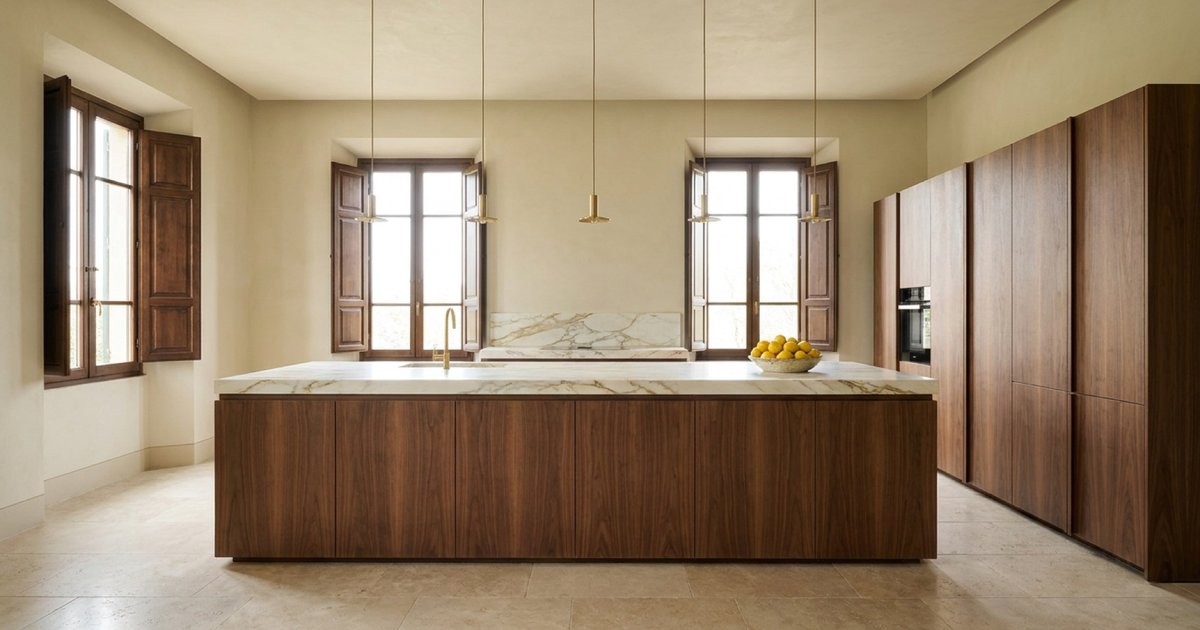
A hood is one of the few appliances you cannot leave until the end. If it is ducted, the duct has to pass through a wall unit, a chimney casing or a ceiling void, and the cabinetmaker needs to know that before the carcases are cut. If it is recirculating, nothing passes through anything, but you accept a different set of limits. Decide this before you place the furniture order, not after.
Ducted or recirculating
Faber describes the two modes plainly. The extractor (ducted) hood sends the air outside and draws fresh air in; Faber recommends it as more effective, safer and quieter. The filtering (recirculating) hood cleans the air through active carbon filters and returns it to the room. Faber links the safety point to gas appliances under Italian Law 46/90 — that is Italian law, and it is cited here only because it is the context Faber gives. It says nothing about what applies in Malta.
Bosch's support page describes the same two modes and adds the installation cautions. In extraction mode the air passes the grease filters and is piped outside, and the exhaust must not be discharged into a flue serving gas or other fuel-burning appliances. Using a disused smoke or exhaust flue needs the consent of a heating engineer. For discharge through an external wall, Bosch suggests a telescopic duct. In recirculation mode the air passes the grease filters plus an odour filter and returns to the room — and the odour filter has to be fitted and matched to the model as set out in its manual. A recirculating hood without its carbon filter is a fan.
Most buyers in Malta who end up recirculating do so because the building makes ducting difficult, not because they prefer it.
Sizing: start with the room
Faber's sizing rule is that an effective hood changes the kitchen air 10 times an hour. It also notes that a powerful motor lets the hood run quietly at lower speeds — a hood that only works on full boost is the wrong hood.
From that 10-air-changes figure, the arithmetic is floor area × ceiling height × 10. That multiplication is our working, derived from Faber's figure, not a number Faber publishes. Worked examples:
| Kitchen | Volume | × 10 air changes |
|---|---|---|
| 12 m2, 2.6 m ceiling | 31.2 m3 | 312 m3/h |
| 14 m2, 2.8 m ceiling | 39.2 m3 | 392 m3/h |
| 16 m2, 3.0 m ceiling | 48 m3 | 480 m3/h |
| 20 m2, 3.2 m ceiling | 64 m3 | 640 m3/h |
Old Maltese townhouses with high ceilings push the number up quickly. An open-plan shell conversion where the kitchen has no door to the living space is a judgement call the sources do not cover — you are no longer dealing with a closed room volume.
Against those numbers, figures from Maltese listings read on 2026-10-05: the Faber Beat Black Matt island hood is 720 m3/h max and the Beat XL BK Matt F80 island is 750 m3/h max at Oxford House. The CATA Corona X No Drip 60 at Newline Living Concept gives 766 m3/h free-air extraction with a maximum pressure of 450. Downdraft is weaker by nature: the Faber Galileo Smart BK 60, an induction hob with built-in downdraft extraction, is quoted at 230-500 m3/h with a boost of 500-620 m3/h.
Note the words. "Free air" and "max" are laboratory conditions with no duct attached. Every metre of duct and every bend takes some of it back, which is why the duct rules matter.
Duct, bends and height
Faber's specification:
- 150 mm diameter for hoods of 300 m3/h or more.
- 120 mm minimum where 150 mm is impossible.
- Smaller ducts cut performance and add noise.
- Keep the duct to 3-4 m with no more than 2 bends.
- Mount the hood at least 65 cm above the hob and not more than 75 cm.
- A ventilation opening of at least 120 mm is needed.
The 3-4 m limit is the one that catches people in apartments. If the hob is on an internal island and the nearest external wall is six metres away round two corners of ceiling void, you are outside the maker's own envelope before you start. Either move the hob, or accept recirculation.
Noise and the energy label
Faber measures performance to IEC/EN 61591 and noise to IEC/EN 60704-3, and says a correctly sized, maintained hood should not exceed 55 dB(A). Regular filter cleaning keeps both airflow and noise in check.
The EU label is the cross-brand comparison. Under Regulation (EU) 66/2014 (ecodesign) and 65/2014 (labelling), a range hood's label shows an energy class on the A+++ to D scale, annual energy use in kWh, separate A-G classes for fluid dynamic efficiency (how well it moves air for the energy used), lighting efficiency and grease filtering efficiency, and noise in dB at maximum normal speed. The CATA Corona X No Drip 60 is listed as energy class A on the A+++ to D scale. The Commission's own advice: use boost only when needed, and for recirculating models replace and clean odour filters regularly, because saturated filters reduce performance.
What it costs, and what it keeps costing
Prices below are retailer prices read on 2026-10-05 and will change. The Oxford House Faber prices are sale prices.
| Model | Retailer | Extraction | Price |
|---|---|---|---|
| Faber Beat Black Matt island | Oxford House | 720 m3/h max | 515.00 euro (from 605.00) |
| Faber Beat XL BK Matt F80 island | Oxford House | 750 m3/h max | 1,130.00 euro (from 1,325.00) |
| Faber Galileo Smart BK 60 (induction hob, downdraft) | Oxford House | 230-500 m3/h, boost 500-620 | 1,450.00 euro (from 1,810.00) |
| Faber Zoom Evo Plus island | Oxford House | — | 1,255.00 euro |
| Faber Soft Cube island | Oxford House | — | 1,365.00 euro |
| CATA Corona X No Drip 60 | Newline | 766 m3/h free air | 499.00 euro (from 700.00) |
The CATA includes a charcoal filter, has a booster, a filter-saturation indicator and 4 settings, and measures 595 x 334 x 310 mm. Newline's hood list runs from 109 euro (Cata FK Slim 6000 X) to 549 euro (Cata Corona X No Drip 90), and prices a replacement carbon filter for the Esistyle Kuba island hood at 45 euro. That 45 euro is the number to hold on to if you are recirculating: it is a consumable, it is model-specific, and how often it needs changing is not stated by any source used here.
If you are in an apartment
Whether an external duct is allowed in your building — through a facade, a shaft or anywhere else — is a question for your architect and the building's administrator. Ask both, in writing, before you commit to a ducted hood or to an island hob position that only works with one. No Maltese rule on this could be read for this article.
Two maker cautions bear repeating here because flues are common in older Maltese buildings: Bosch says the exhaust must not be discharged into a flue serving gas or other fuel-burning appliances, and that using a disused smoke or exhaust flue needs the consent of a heating engineer.
Buying in Malta or Sicily
The Italian brands sold here are sold in Sicily too, and Sicily is a ferry ride away and often cheaper for the same products. Within the EU, VAT is paid once in the country of purchase, so a hood bought in Italy is not taxed again on arrival. Set against that: warranty service, and getting a replacement filter in three years. If you are in Gozo, remember every delivery means a ferry.
Most Maltese showrooms do not publish which brands they stock, so matching a specific hood to a showroom usually means asking.
Before you order the units
- Fix the hob position on the plan.
- Work out the room volume and the 10-air-changes figure.
- Decide ducted or recirculating — and if ducted, have the architect confirm the route fits inside 3-4 m and 2 bends at 150 mm.
- Confirm 65-75 cm clearance works with your wall-unit heights.
- If recirculating, find out what the carbon filter for that exact model costs locally.
Common questions
- Is a ducted or a recirculating hood better?
- Faber recommends the extractor (ducted) version as more effective, safer and quieter: it sends the air outside and draws fresh air in. A filtering (recirculating) hood cleans the air through active carbon filters and returns it to the room. The practical question is usually not which is better but whether an external duct is possible at all in your building.
- How many cubic metres per hour do I need?
- Faber's guidance is that an effective hood changes the kitchen air 10 times an hour. The arithmetic that follows from that — floor area multiplied by ceiling height multiplied by 10 — is our own working, not a figure Faber publishes. A 14 m2 kitchen with a 2.8 m ceiling is 39.2 m3, so 392 m3/h.
- What size duct does a hood need?
- Faber specifies 150 mm diameter for hoods of 300 m3/h or more, with 120 mm as the minimum where 150 mm is impossible. Smaller ducts cut performance and add noise. Keep the duct to 3-4 m with no more than 2 bends.
- How high above the hob should the hood go?
- Faber says at least 65 cm above the hob and not more than 75 cm.
- What does a replacement carbon filter cost in Malta?
- Newline Living Concept's hood list prices a replacement carbon filter for the Esistyle Kuba island hood at 45 euro, read on 2026-10-05. That is one model from one retailer; filters are model-specific and prices change.
What we could not establish
- No Maltese rule on domestic kitchen extraction could be read for this article: the Planning Authority's DC15 document returned a 403 error and no Building Regulation Office ventilation document was found. Nothing here should be read as describing a Maltese planning, building or condominium requirement.
- How often a carbon filter needs replacing is not stated by any of the sources used; the European Commission says only that odour filters should be replaced and cleaned regularly.
- Noise figures in dB(A) for the specific hoods listed by the Maltese retailers were not published on the pages read, so the 55 dB(A) ceiling cannot be checked against them.
- Installation cost — coring an external wall, running and boxing the duct — is not published by any source used.
- Whether a given Maltese showroom stocks a hood brand at all is mostly unpublished; most showrooms do not list their brands online.
Sources
- Should I choose a filtering hood or an extractor hood? — Faber S.p.A. · read 2026-10-05
- How do I use the air extraction and recirculation modes on a Bosch cooker hood? — Bosch Home Appliances (UK support) · read 2026-10-05
- Faber brand page — Oxford House (Malta) · read 2026-10-05
- CATA Corona X No Drip 60 hood — Newline Living Concept (Malta) · read 2026-10-05
- Range hoods — European Commission (Energy-efficient products) · read 2026-10-05
Ready to price it?
One upload goes to every showroom that stocks what you are after, in Malta and Sicily.
Get quotes